

March 11, 2026
Tooth Extractions
Many people feel nervous when they hear that a tooth might need to be removed. The first question that often comes to mind is simple: will it hurt? Fear of pain is one of the main reasons patients delay dental care, even when a problem clearly needs attention. Over time, that delay can make the issue worse and lead to more complicated treatment.
Modern dentistry, however, focuses heavily on patient comfort. Today’s procedures are carefully controlled, and dentists use techniques designed to minimize discomfort throughout the process. In most cases, patients are surprised by how manageable the experience actually is.
This guide explains what really happens during tooth extractions, why they are sometimes necessary, and how dentists manage discomfort during treatment. For families around Gold River who enjoy weekend hikes near the American River Parkway or busy community events, dental pain can easily disrupt everyday life. Understanding the process can help you make confident decisions about your oral health.
Why Dentists Sometimes Recommend Tooth Extraction
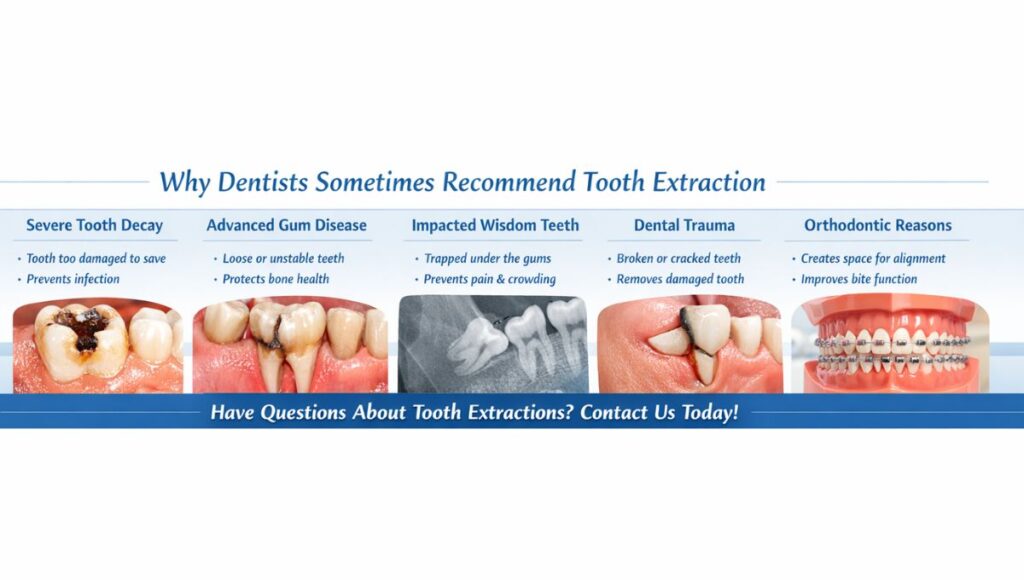
Although dentists always try to preserve natural teeth whenever possible, there are situations where tooth extractions become the healthiest option. Understanding these circumstances helps patients see that the procedure is often recommended to prevent more serious oral health problems.
Severe Tooth Decay
When a cavity spreads deep into the tooth structure, it may destroy too much of the tooth to restore. In cases where fillings or crowns cannot repair the damage, removal may be necessary to protect nearby teeth and prevent infection.
Advanced Gum Disease
Gum disease can weaken the bone and tissues that support the teeth. As the condition progresses, teeth may become loose and unstable. Removing a severely affected tooth can help preserve surrounding bone and prevent further oral health complications.
Impacted Teeth
Wisdom teeth often become trapped beneath the gum line or grow at an angle. Impacted teeth can cause swelling, pain, and infection. Removing them helps prevent pressure on neighboring teeth and reduces the risk of recurring discomfort.
Dental Trauma
Accidents during sports, biking, or outdoor activities around Gold River can sometimes lead to cracked or broken teeth. When a tooth is damaged beyond repair, extraction may be the safest solution to protect the rest of the mouth.
Preparing for Orthodontic Treatment
In some orthodontic cases, removing a tooth helps create space for proper alignment. This allows teeth to move into healthier positions and improves long-term bite function.
Is Tooth Extraction Actually Painful?
The idea of pain is what worries most patients before treatment. Fortunately, modern dental care is designed to prevent discomfort during the procedure.
Before removal begins, the dentist administers local anesthesia. This numbs the surrounding area and prevents pain signals from reaching the nerves. Patients remain awake, but the treated area becomes completely numb.
During the procedure, patients usually feel pressure rather than pain. The dentist gently loosens the tooth from the surrounding tissues before removing it. This movement can create a sensation of pressure or mild vibration, but the numbing medication keeps the process comfortable.
The entire procedure often takes less time than people expect. Straightforward tooth extractions in Gold River may take only a few minutes once the area is numb. More complex cases may take slightly longer, but are still carefully controlled.
After the anesthesia wears off, some soreness is normal. However, this discomfort is usually manageable with basic aftercare instructions. Most patients report that the experience is much easier than they anticipated.
What Happens During a Tooth Extraction Procedure
Understanding the steps involved can help patients feel more relaxed before treatment. Dentists follow a clear and structured process to ensure both safety and comfort.
First, the dentist performs a detailed exam and may take digital X-rays. These images help identify the tooth’s position, root shape, and surrounding bone structure.
Next, the dentist numbs the area using local anesthesia. Patients may feel a brief pinch during the injection, but the numbing effect begins quickly.
Once the area is numb, the dentist gently loosens the tooth using specialized instruments. This process separates the tooth from the surrounding ligament and bone.
After the tooth becomes loose enough, the dentist carefully removes it. The socket is then cleaned to remove any debris or infection.
Finally, gauze is placed over the area to control bleeding and allow a protective clot to form. Patients receive clear instructions for recovery before leaving the office.
Knowing these steps ahead of time helps many patients feel calmer and more confident about the procedure.
Types of Tooth Extractions Dentists Perform
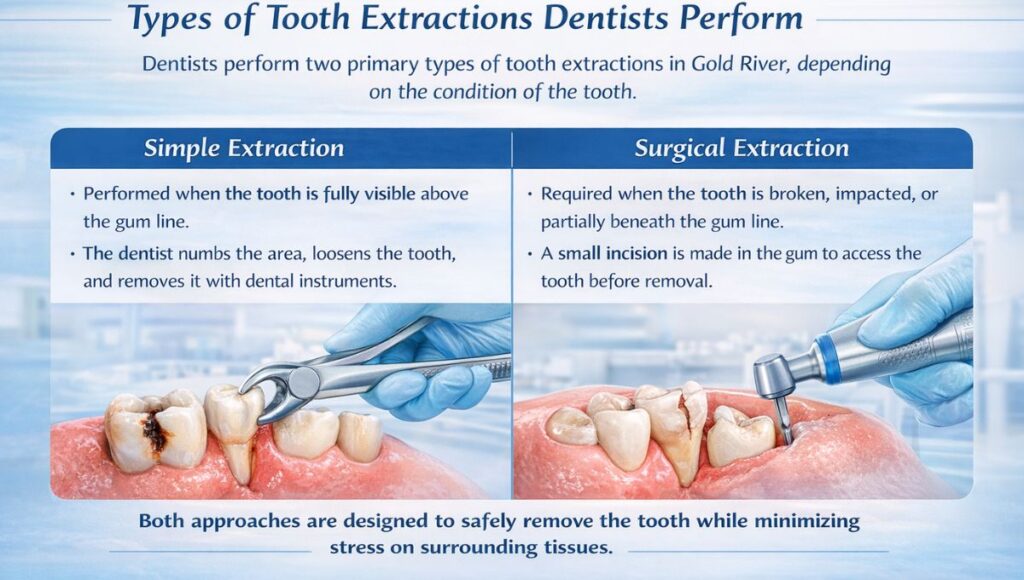
Dentists perform two primary types of tooth extractions in Gold River, depending on the condition of the tooth.
Simple Extraction
A simple extraction is performed when the tooth is fully visible above the gum line. The dentist numbs the area, loosens the tooth, and removes it with dental instruments. These procedures are usually quick and straightforward.
Surgical Extraction
A surgical extraction is required when the tooth is broken, impacted, or partially beneath the gum line. In these cases, the dentist may make a small opening in the gum to access the tooth. Even though the process sounds complex, it is still a controlled and routine procedure performed with anesthesia.
Both approaches are designed to remove the tooth safely while minimizing stress on surrounding tissues.
What to Expect After a Tooth Extraction
Recovery after tooth extractions is usually smooth when patients follow their dentist’s instructions.
It is normal to experience mild swelling and slight bleeding for the first day. The body forms a blood clot in the socket, which protects the area and supports healing. Jaw soreness or mild tenderness may also occur for a short period.
Most swelling improves within a few days. Many patients return to their normal routines quickly, though strenuous activities should be avoided initially.
Temporary sensitivity around the extraction area is also common. As the tissues heal, the discomfort gradually fades.
Complete healing of the gum tissue typically occurs within one to two weeks, though deeper bone healing continues for a longer period.
Recovery Tips for a Faster Healing Process
Proper aftercare plays an important role in recovery. Following simple guidelines can help protect the healing area and reduce discomfort.
Helpful recovery tips include:
- Resting during the first 24 hours
- Avoiding straws, smoking, and vigorous rinsing
- Eating soft foods such as yogurt, soup, or mashed potatoes
- Keeping the mouth clean while avoiding the extraction site initially
- Following the dentist’s instructions carefully
Cold compresses can also help reduce swelling during the first day. Drinking plenty of water and maintaining good oral hygiene supports the healing process as well.
These small steps help the body recover more comfortably.
Warning Signs That Require a Dentist’s Attention
While most recoveries progress normally, certain symptoms may require evaluation by a dentist.
Contact a dental professional if you experience:
- Severe pain that worsens after several days
- Bleeding that does not slow down
- Fever or chills
- Swelling that continues to increase
- Signs of infection, such as unusual discharge
One uncommon complication called dry socket can occur if the protective clot becomes dislodged. Dentists can treat this condition quickly when addressed early. Monitoring symptoms during recovery helps prevent complications and promotes a smooth healing process.
How Modern Dentistry Makes Tooth Extractions More Comfortable
Dental technology has advanced significantly over the years, making procedures far more comfortable than in the past.
Improved anesthetics work quickly and effectively, keeping the treatment area numb throughout the procedure. Dentists also use refined techniques designed to minimize pressure on surrounding tissues.
Sedation options may be available for patients who feel anxious about treatment. These options help patients remain relaxed while the dentist performs the procedure.
Digital imaging technology also allows dentists to plan treatment with greater precision. This helps reduce uncertainty and supports a more controlled process.
These advancements have made dental procedures far more comfortable than many patients expect.
When Should You See a Dentist for Tooth Pain?
Persistent tooth pain should never be ignored. Early evaluation helps dentists treat problems before they become severe.
You should contact a dentist if you notice:
- Ongoing toothache that does not improve
- Swelling around the gums
- Difficulty chewing or biting
- Sensitivity when applying pressure
Early treatment often allows dentists to save the tooth or prevent infection from spreading. Ignoring symptoms can allow the problem to worsen and lead to more complicated treatment later.
Residents around Gold River who enjoy active lifestyles often benefit from routine dental visits that help catch these issues early.
A Healthier Smile Starts With the Right Dental Care
Hearing that a tooth needs to be removed can feel intimidating, but the procedure is far more controlled and comfortable than many patients expect. Modern techniques focus on minimizing discomfort while protecting the long-term health of your smile.
If you are experiencing tooth pain or signs of infection, it may be time to speak with a dental professional. The team at River Family Dentistry provides compassionate care designed to help patients feel informed and comfortable throughout treatment.
Taking action early can help prevent more serious oral health problems. A simple consultation can provide answers, guidance, and a clear path toward restoring your comfort and confidence.
FAQs
How long does it take to remove a tooth?
Most removals take about 20 to 40 minutes, depending on the tooth’s position and condition. Simple cases are usually completed faster once the area is numb.
How long does recovery take after a tooth is removed?
Initial healing usually takes about one to two weeks. However, the deeper bone structure continues healing over several weeks.
What foods should I eat after a tooth is removed?
Soft foods such as yogurt, soup, scrambled eggs, mashed potatoes, and smoothies are recommended during the first few days.
Can I return to work after a tooth extraction?
Many patients return to normal activities the next day. However, it is best to avoid strenuous physical activity for at least 24 hours.
When can I brush my teeth after the procedure?
You can brush your teeth the same day but should avoid brushing directly over the treated area for the first 24 hours.
Recent Posts

Oct. 26, 2026
Why Ignoring a Dental Abscess Could Be Dangerous

Oct. 19, 2026
Why Custom Mouthguards Beat Store-Bought for Young Athletes

Oct. 12, 2026
What Happens Right After Your Cleaning Matters Most

Sep. 28, 2026
Keep Your Dental Crown Lasting: Foods, Habits, and Nighttime Protection

Sep. 21, 2026